
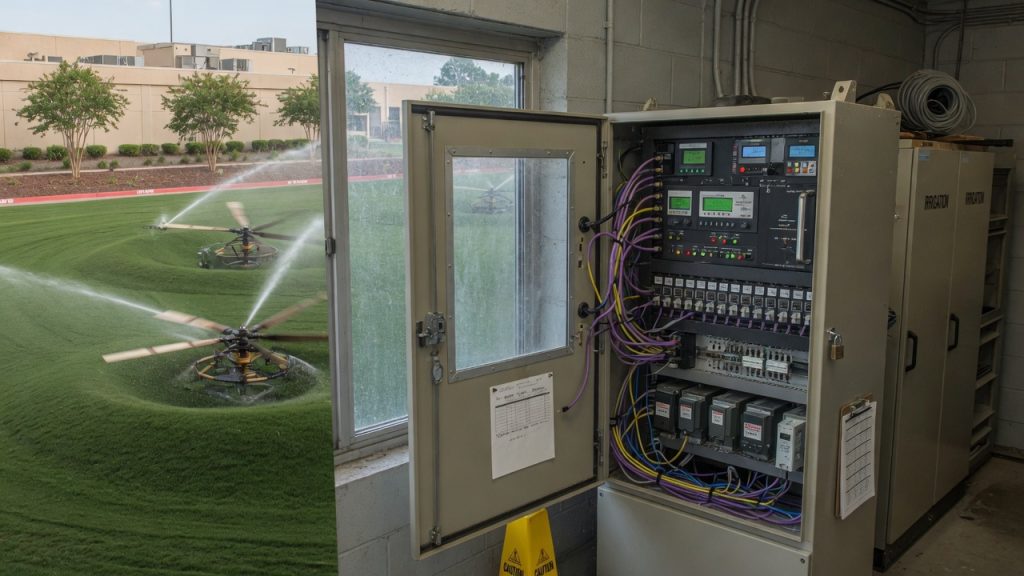
What Houston property owners need to know about Commercial and HOA Irrigation Repair in Greater Houston
Greater Houston is one of the toughest irrigation environments in Texas. Expansive clay soils, long summers, intense rainfall events, and aggressive turf growth combine to stress valves, laterals, heads, and controllers. This guide — Commercial and HOA Irrigation Repair in Greater Houston — is written for homeowners, property managers, and HOA board members who want technical clarity before they authorize repairs. Whether you are in The Woodlands irrigation repair, Sugar Land irrigation repair, or Energy Corridor irrigation repair, the diagnostic order below prevents parts-roulette spending.
The core service path for this issue is Commercial Irrigation Repair, often supported by System Diagnostics and Controller & Timer Repair. Technicians serving The Woodlands irrigation repair, Sugar Land irrigation repair, and Energy Corridor irrigation repair see the same failure patterns: clay movement, heat-stressed plastics, storm electrical events, and landscape contractor damage to wires and laterals.
Symptoms that mean you should book service
Do not ignore rising water bills, soggy areas, dry wedges in the lawn, zones that never start, zones that never stop, misting heads, or controllers that reboot randomly. Each symptom maps to a short list of likely causes — but only testing confirms which one.
Photograph the controller display, note which station numbers fail, and mark wet or dry areas with flags if you can. That information shortens diagnostic time on site.
Diagnostic approach used by full-system technicians
We separate electrical faults from hydraulic faults before opening large trenches. For this topic, that means validating the controller path, field wiring, valve operation, pressure, and coverage pattern. Commercial Irrigation Repair is the primary work center; System Diagnostics is added when the root cause spans multiple subsystems.
You receive plain-English findings and prioritized repairs. Emergency items — flooding, stuck-on zones, or commercial outages — jump the queue.
Repair options and what affects cost
Costs vary with access, depth, parts type, and whether multiple zones share a damaged common wire or mainline. Transparent diagnostics prevent stacking unnecessary parts. In clay, proper bedding and pressure testing matter as much as the coupling you install.
Commercial and HOA sites may need after-hours windows, documentation, and multi-controller coordination — especially in The Woodlands irrigation repair and Sugar Land irrigation repair.
Prevention and seasonal maintenance
Spring startups, mid-summer coverage checks, and pre-freeze backflow protection prevent most emergency calls. Keep valve boxes accessible, update zone maps after landscaping, and use rain sensors that actually get wet when it rains.
If you manage multiple properties, standardize controllers and labeling. It cuts future diagnostic time across Energy Corridor irrigation repair routes and the wider metro.
Local notes for Greater Houston
Gulf humidity accelerates corrosion on poorly sealed connections. Afternoon storms make rain-sensor placement critical. Master-planned HOAs in Sugar Land irrigation repair often enforce appearance standards that reward clean valve boxes and even turf color — both of which depend on a healthy irrigation system.
When you are ready for help, start with Commercial Irrigation Repair or a whole-system visit via System Diagnostics. For active flooding, use emergency service immediately.
Technicians document station numbers, valve locations when found, and parts used so the next visit is faster. On commercial sites, that documentation is often required by property managers and HOA boards.
Houston’s irrigation season effectively runs much of the year. Controllers that sit idle still suffer from heat in garages and power events. A quick off-season check of transformer voltage and sensor status prevents spring surprises.
When excavation is required, clean trench walls, correct bedding, and a pressure hold test are non-negotiable quality steps. Closing a trench without a test is how callbacks happen two waterings later.
Parts selection matters: matching valve brands where possible, using waterproof wire connectors, and choosing nozzles for measured pressure beats installing whatever is cheapest on the truck.
If your system was installed by a production builder, expect original splice quality and head spacing to vary. A diagnostic visit often becomes a punch-list of small corrections that dramatically improve coverage.
Water waste is not only environmental — it is a direct operating cost for HOAs and commercial managers. Fixing stuck valves and misting heads frequently pays for the service call within a billing cycle or two.
Maintenance checklist you can reuse
Monthly in season: walk zones while running, look for misting, heads stuck up, and dry wedges. Quarterly: open a sample of valve boxes, check for standing water and chewed wires. Annually: verify rain sensor operation, update seasonal adjust, and confirm backflow testing status with your local requirements.
Keep a simple note on your phone: controller brand/model, number of stations, location of backflow, and any gate codes. That five-line note saves real time on every service visit across the Houston metro.
Water waste is not only environmental — it is a direct operating cost for HOAs and commercial managers. Fixing stuck valves and misting heads frequently pays for the service call within a billing cycle or two.
Technicians document station numbers, valve locations when found, and parts used so the next visit is faster. On commercial sites, that documentation is often required by property managers and HOA boards.
Houston’s irrigation season effectively runs much of the year. Controllers that sit idle still suffer from heat in garages and power events. A quick off-season check of transformer voltage and sensor status prevents spring surprises.
When excavation is required, clean trench walls, correct bedding, and a pressure hold test are non-negotiable quality steps. Closing a trench without a test is how callbacks happen two waterings later.
Parts selection matters: matching valve brands where possible, using waterproof wire connectors, and choosing nozzles for measured pressure beats installing whatever is cheapest on the truck.
Related guides and local pages
- How Pros Find Buried Irrigation Valves in Houston Yards
- Book an Irrigation Audit Before Houston Summer Peak
- Irrigation Best Practices for St. Augustine in Houston
- Commercial Irrigation Repair
- System Diagnostics
- Controller & Timer Repair
- The Woodlands irrigation repair
- Sugar Land irrigation repair
- Energy Corridor irrigation repair
Need irrigation repair in Houston? Call (346) 627-2400 or request service online. Houston Irrigation Repair serves Harris, Fort Bend, Montgomery, Brazoria, Galveston, and Waller counties with full-system diagnostics.
Keep reading
- Why Drip Emitters Clog in Houston (And How to Prevent It)
- Best Time to Water Lawns in Houston (And Why Night Windows Win)
- Irrigation Damage After Landscaping or Fence Work
- MP Rotator vs Spray Heads for Houston Lawns
- Schedule 40 vs Class 200 Irrigation Pipe Under Houston Driveways
- Why an Irrigation Zone Short Cycles or Chatters
Related irrigation services
Service areas
Need help with your system?
Call Houston Irrigation Repair at (346) 627-2400 for full-system diagnostics and repair across the Houston metro.